To choose right expandable braided sleeving, match five things to your project: size, material toughness, stretch capability, split versus non-split design, and color. Think of these as steps in a decision path. Start with where it will be installed and the size of the bundle, then move on to heat and mechanical demands, environmental exposure, and flame requirements. MJ FLEX supplies expandable braided wire sleeve and expandable braided cable sleeving in these setups, so this guide reflects real product options. Compare sizes, stretch, material durability, and design details in order, and you will reach a confident choice without guesswork.
Key Takeaways
-
Measure your cable bundle first. Choose a sleeve size that fits snugly or loosely, based on what you like.
-
Pick a sleeve material that fits the heat, rubbing, and moisture. Look at the spec sheet for temperature ratings.
-
Pick sleeving that can stretch a lot for big connectors. Standard sleeving works fine for simple bundles.
-
Choose a split design for retrofits so you don't have to disconnect cables. Use non-split for new builds.
-
Use color to group cables by system. Put your color plan in the documentation so cables are easy to trace.
Choose Right Expandable Braided Sleeving: The Basics
Expandable braided sleeving is a woven tube made of plastic strands. The open weave lets the tube stretch over connectors and odd shapes, and then it grips the bundle once in place. To choose right expandable braided sleeving, you weigh three things: the environment, the protection level, and the installation constraints. A clean office rack and a dusty factory floor need different answers.
Common Applications
Cable bundling is the most common job. You slide the sleeve over an existing run without disconnecting anything, so you can manage tiny bundles of fine wires or complex networking and audio-visual cables. Wire harness protection suits assemblies, breakouts, splices, and rerouting work. Abrasion shielding fits wires and hoses that rub against frames, guards, or chains.
General-purpose protection works well in homes, offices, garages, and commercial settings. TechFlex Flexo PET, for example, braids 10 mil PET monofilament yarn that expands up to 150%, per buyheatshrink.com. Military, aerospace, and medical projects often need woven wrap or fire-resistant versions instead. MJ FLEX offers these configurations, so this guide reflects real product options.
Why Expandability Matters
The weave is the whole point. Push the ends together and the diameter grows, which lets the sleeve pass over chunky plugs or tight bends. Pull it lengthwise and the diameter shrinks, so the sleeve hugs the bundle. Cabletiesunlimited.com notes this action is purely mechanical, not a heat reaction.
That behavior shapes your cable protection plan. A sleeve with room to expand slides on fast and covers awkward shapes. Too little expandability and you fight the install. Too much and the sleeve may sit loose. Match the stretch range to your bundle, and the expandable braided wire sleeve does the work for you.
How to Determine the Right Cable Sleeve Size
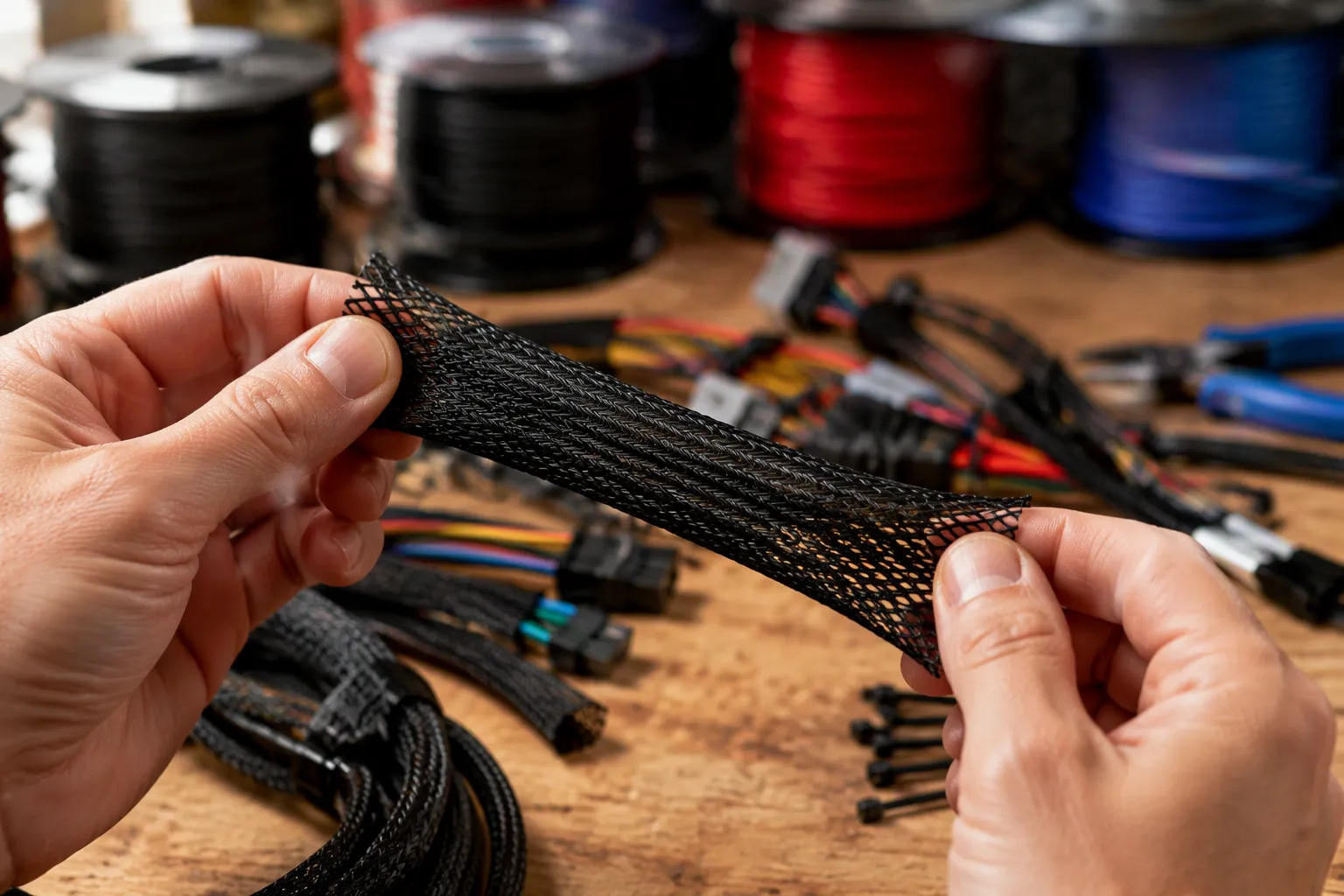
Sizing decides whether the install goes smoothly or turns into a fight. You have two paths. The snug-fit rule says pick a sleeve diameter slightly smaller than the bundle, so the braid expands and grips. The loose-fit rule says pick one slightly larger for a relaxed fit. Either way, the minimum sleeve diameter should sit just a little smaller than the cable for a proper fit.
How to Measure Cable Sleeve Size
Learning how to measure cable sleeve size takes one tool and a few minutes. Atkins and Pearce lays out a simple sequence:
-
Measure cable diameter with calipers for an accurate reading.
-
Decide on a snug or loose fit.
-
Select a sleeve diameter slightly smaller for snug, slightly larger for loose.
-
Add a few centimeters of length, because braided sleeves contract in length as they expand in diameter.
MJ-IST adds two practical checks. Group multiple cables and measure the total diameter of your cable bundle, using a flexible tape for odd shapes. Then confirm the sleeving can stretch over any large connectors before you commit.
Size Guide for PET Braided Cord Sleeves
This size guide for pet braided cord sleeves shows where common widths fit best:
|
Product |
Best For |
|---|---|
|
1/4" x 25ft |
Small cable bundles, home office wires, USB cables |
|
1/4" x 100ft |
Multiple projects with small wires |
|
1/2" x 25ft |
Medium bundles, gaming setups, A/V systems |
|
3/4" x 25ft |
Power cables, thick computer wires, automotive wiring |
|
1" x 100ft |
Heavy-duty applications, multiple thick cables |
|
1/4" & 1/2" bundle |
Mixed cable sizes in one project |
XFasten notes the bundle option offers the most flexibility when one project mixes cable sizes. MJ-IST reports that a pet braided sleeve can expand to 1.5 times its resting state, so check the manufacturer's minimum and maximum diameters. That range matters most when choosing a cable sleeve size for bundles with plugs on the ends.
A few MJ FLEX sizing tips round this out. For extremely long cabling, an oversized braid plus a PTFE spray eases the slide. You can cut braided sleeving to length, but manage fraying right after the cut with a hot knife or a clean, tight wrap. Confirm the correct cable sleeve size against the product spec sheet before ordering, and the expandable braided cable sleeving will fit as planned.
Material Durability Factors
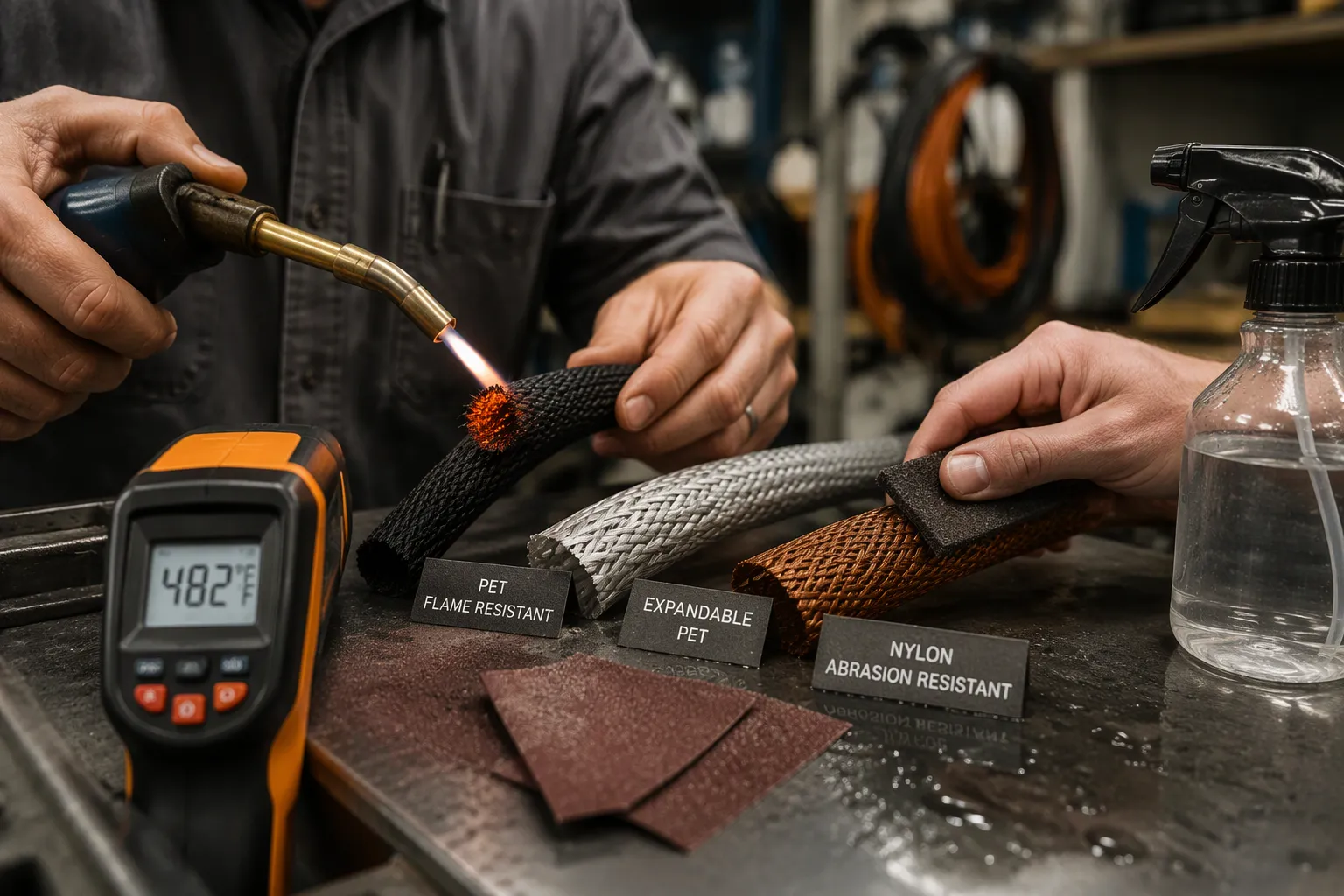
The material you pick decides how long your sleeve will last. You need to think about three forces: heat, abrasion, and moisture resistance. Each material handles these forces in different ways, so match the material to the conditions you actually have.
Heat, Abrasion, and Moisture Resistance
Heat tolerance changes a lot across cable sleeve material options. AerosUSA lists Nylon as a monofilament material with excellent abrasion resistance and flexibility. PET gives heat protection and works well with engine chemicals, fuel, and cleaning solvents. Polyester resists corrosion and heat for electrical and automotive work. PPS resists flames, solvents, and high temperatures, and it stays inert to acids, bases, fuels, and steam. Nomex offers thermal stability with a high melting point. Fiberglass sleeving coated with silicone varnish and rubber can run for long periods at up to 300 degrees Celsius (572 degrees Fahrenheit), per AerosUSA.
Abrasion resistance also sets the options apart. Irwin Industrial notes that general-purpose expandable braided sleeving offers excellent abrasion and cut-through resistance. Heavy-duty braided sleeving uses tightly woven nylon fabric to shield hoses and cables from abrasion and UV damage. Fray-resistant versions add braid density for higher abrasion resistance without losing flexibility.
How a material handles moisture matters just as much. MJ FLEX reports that PET delivers superior moisture resistance and resists gasoline and automotive fluids. Nylon fights off moisture well in wet applications. PPS stays inert to steam, and Nomex resists moisture and chemicals. Keep one limit in mind: open-braid constructions are not waterproof sealing materials or primary electrical insulation.
Matching Material to Environment
Where you install the sleeve sets your priority list. MJ FLEX maps common locations to their main demands. Dashboard and interior areas need flame retardancy, flexibility, and noise control. Engine compartments demand temperature resistance, vibration resistance, and fluid compatibility. Doors and moving parts call for repeated bending and abrasion protection. Chassis and exposed areas need abrasion resistance, moisture protection, and weather resistance. Electric vehicle power distribution areas require flame retardancy, heat resistance, and mechanical protection.
A pet braided sleeve fits many of these jobs. PET braided sleeves hold their shape and color under UV exposure, per MJ-IST. They also withstand temperatures from -50°C to 150°C and resist chemical solvents, oils, and fuels. That profile suits solar, marine, and EV charging work. A pet braided cord sleeve brings the same UV stability and chemical resistance to industrial machinery, per Att Insulating Material. These traits make pet braided sleeves a cost-efficient way to protect cables from abrasion, heat, and moisture.
Let the environment lead. Choose a cable sleeve material that matches the heat, chemical, and weather exposure you expect. That one decision drives the durability of your cable protection. An expandable braided wire sleeve or expandable braided cable sleeving only performs as well as its material allows, so check the spec sheet before you order.
Expandability and Split Design Choices
Standard vs. High-Expandability
Standard expandable sleeving works for most jobs. Its weave stretches enough to slide over connectors and grip the bundle. It also holds a neat shape once installed. Choose standard expandability when your bundle stays close to the sleeve's resting diameter and you want a clean, tight look.
High-expandability sleeving stretches much further. The open weave opens wide to take in large plugs, breakouts, and odd shapes. Then it closes back down around the bundle. Pick it when your cable sleeve must pass over bulky ends or when one run mixes thick and thin sections. A high-expandability expandable braided wire sleeve saves time on complex harnesses. Match the stretch range to your bundle, and either option works well.
When to Choose Split or Non-Split
Split and non-split sleeves solve different installation problems. A non-split design slides on from the end of the cable. It gives full coverage with no seam, so it suits new builds where you can feed the sleeve over a free end. A split design opens along its length and wraps around existing runs. Choose it for retrofits, repairs, or any job where disconnecting cables is not practical.
Both designs protect equally well when installed correctly. The choice comes down to your installation limits, not to quality. MJ FLEX offers both setups, so you can match the design to your routing needs. Check the expandability range and the diameter of each option against your bundle before ordering. That last check keeps your expandable braided cable sleeving installation smooth from start to finish.
Color Options for Coding and Aesthetics
Color Coding for Identification
Color turns a bundle of identical cables into a map you can read. Buyheatshrink.com notes that TechFlex braided cable sleeves come in over 25 colors, patterns, and combinations. Bright, deeply saturated outsides give these sleeves high visibility. That visibility helps you flag critical runs, mark possible hazards, and color-code a whole panel at a glance.
Grouping is the practical payoff. MJ-IST explains that braided nylon sleeving comes in various colors, so you can assign one color per system. Run red for power, blue for data, and yellow for signal lines. Maintenance and troubleshooting get faster, because a technician traces a circuit by sight instead of by tag. The same logic works on expandable braided cable sleeving in a rack, a harness, or a control cabinet. Pick a color scheme before you order, and write it into your documentation.
Aesthetic and Branding Considerations
Color also shapes how a finished installation looks. Cord Theory groups the main considerations in the table below.
|
Consideration |
Guidance |
|---|---|
|
General color choice |
Match your setup; black, white, and gray are popular |
|
Black sleeves |
Suit gaming PCs, RGB builds, and dark desks; hide dirt |
|
White sleeves |
Fit minimalist and light-colored workspaces |
|
Gray sleeves |
Give a balanced look in home offices and corporate setups |
|
RGB matching |
Popular pairings include black with red, blue, green, or purple |
|
Bright colors |
Add personality but draw attention to bundles |
|
Material |
PET offers many colors and a clean look; nylon feels softer and more premium |
|
Coordination |
Match desk, case, and monitor colors for a consistent look |
|
Finishing |
Heat shrink tubing secures ends and prevents fraying |
Neutral tones usually create the cleanest result, per Cord Theory. Bright shades work better as accents on a single visible run. A branded color on an expandable braided wire sleeve can also reinforce identity in a showroom or demo unit. Weigh appearance against function, and let the setting decide.
Follow one order: application first, then size, material, expandability, split versus non-split design, and color last. Each cable sleeve choice makes the next one easier. Match every factor to your project's setting and routing needs, and you will choose right expandable braided sleeving with confidence.
To choose right expandable braided sleeving, start with size. Pick the cable sleeve size that fits your bundle, make sure the material handles heat and abrasion, then pick the stretch range and design. Color comes last.
Look at MJ FLEX's expandable braided wire sleeve and expandable braided cable sleeving options. Check your cable sleeve size against the spec sheet before you buy, and the sleeving will fit as planned.
FAQ
What size sleeve should you pick for a bundle with large connectors?
Measure the bundle first. Then check the sleeve's maximum expanded diameter against the plug size. A PET braided sleeve can expand to 1.5 times its resting state, so pick a size whose expanded range clears the connector. Confirm the numbers on the spec sheet before you order.
Can you install sleeving without disconnecting the cables?
Yes. Choose a split design. It opens along its length and wraps around existing runs, so retrofits and repairs go fast. A non-split expandable braided cable sleeving works better on new builds, where you can slide it over a free cable end.
Which material suits an engine bay or a hot enclosure?
Pick a material rated for the heat you expect. PET handles -50°C to 150°C. Silicone-coated fiberglass runs up to 300°C for long periods. Match the rating to your measured temperature, and the expandable braided wire sleeve will hold up.
Does cutting the sleeve cause fraying?
It can. Cut with a hot knife or wrap the cut point tightly right away. Manage the frayed edge before you slide the sleeve on. A clean cut keeps the install neat and protects the braid from unraveling later.
Can you use color to organize a panel?
Yes. Assign one color per system, such as red for power and blue for data. Technicians then trace circuits by sight. Write the scheme into your documentation, and maintenance gets faster on every future visit.