Braided, woven, and tubular designs each deliver cable protection in a distinct way. The right pick hinges on one question: what matters most for the run? Readers who rank abrasion resistance, coverage density, flexibility, heat resistance, expansion range, or cost gain a clear lens for judging every option. This cable protection sleeving types compared guide weighs all three families on technical performance, application fit, regulatory compliance, and cost. MJ FLEX adds practical guidance for specifying the right sleeving. Which types of sleeving suit a given cable bundle? The answer starts with the priority, not the product. Name that priority first, then read every comparison through it.
Key Takeaways
-
Braided sleeving bends easily and resists wear. It suits tight routes and moving parts.
-
Woven sleeving handles high heat and blocks fine dust. It works well near engines and furnaces.
-
Tubular sleeving covers a cable bundle in one pass. It saves time on long runs.
-
Match the sleeving type to your top priority. This prevents overpaying or under-protecting.
-
Check temperature, chemicals, and UV needs before you buy. The right choice keeps cables safe.
Cable Protection Sleeving Types Compared: The Framework
Construction Basics at a Glance
An electrical sleeve is a braided, knitted, woven, or extruded tube that slips over conductors in an electric assembly. Each construction method shapes how the sleeve behaves on the job. Braided sleeving uses an open-weave construction. This design lets air circulate while it shields wires and cables from abrasion, chemicals, and UV light. HellermannTyton notes that its physical weave stays flexible and provides enough airflow to avoid trapping moisture or humidity. The same source reports resistance to salts, solvents, de-icing fluids, and petroleum products.
Braided sleeving does not shrink like heat shrink tubing. Heat shrink tubing contracts when heated; braided sleeving keeps its shape, size, and flexibility. It fits over the cable bundle instead. Installers slide it on, then secure the ends with heat shrink tubing, cable ties, or clamps. The sleeve expands when pushed together and grips when pulled lengthwise, so it clears bulky connectors and odd shapes.
|
Protection goal |
How the construction delivers it |
|---|---|
|
Abrasion |
Tight braid resists cuts and repetitive wear |
|
Chemicals |
Inertness to fuels, salts, and solvents |
|
UV and weather |
Resilience against sunlight and moisture |
|
Flexibility |
Open weave adjusts to twisting and flexing |
Matching Construction to Protection Goals
The framework starts with the priority named in the introduction. A team that ranks abrasion resistance first should study braid density and material. A team that ranks coverage density first should look at woven structures. A team that ranks expansion range first should favor expandable braided styles. This lens keeps the cable protection sleeving types compared honest, because no single construction wins on every measure.
Protection goals also set the installation plan. Open-weave sleeving suits routing that needs airflow and moisture release. Tight constructions suit dirty or high-contact zones. Buyers who treat these types of sleeving as interchangeable risk overpaying for one job and under-protecting the next. The sections that follow apply this framework to braided, woven, and tubular options in turn.
Braided Sleeving: Flexible Protection
Overview and Key Benefits
Braided sleeving earns its place through movement. The open weave bends, twists, and routes around tight corners without cracking or kinking, so installers slide it over a harness quickly and secure the ends with cable ties or heat shrink tubing. Cableties Unlimited lists flexibility, abrasion resistance, and expandability as the core benefits of standard braided constructions. Expandable braided sleeving stretches over bulky connectors and then grips the bundle, which simplifies retrofits on assembled equipment.
The protection profile extends beyond simple wear. Braided designs shield wires and cables from impact, vibration, fuels, solvents, and sunlight, and they resist corrosion in outdoor runs. This combination suits cable management, harness protection, and general abrasion and UV defense across automotive, aerospace, industrial, and renewable energy installations. One limit deserves attention: braided sleeving is flexible and easy to install, but it lacks the high temperature resistance of high temperature woven sleeving. Specifiers who need sustained heat performance should look to the woven family instead.
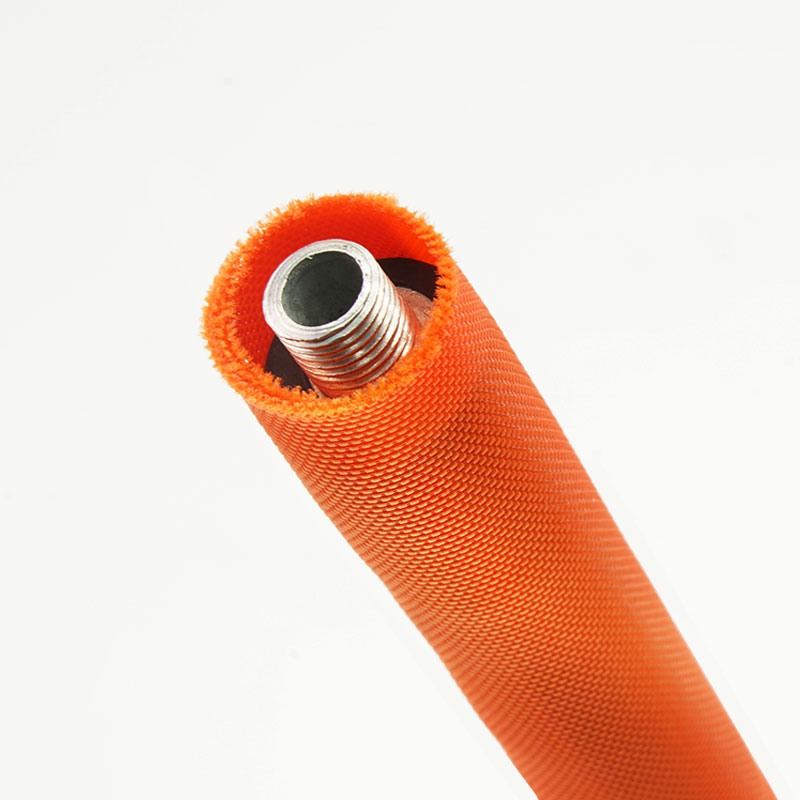
Different Types of Braided Sleeving
Material choice drives the performance of every braided sleeve. MJ FLEX groups the common options by characteristic and typical application.
|
Material |
Main characteristics |
Typical applications |
|---|---|---|
|
PET polyester |
Lightweight, flexible, economical, abrasion resistant |
General wiring, automotive harnesses, electronics |
|
PA6 / PA66 nylon |
High toughness and abrasion resistance |
Machinery, automotive systems, hose protection |
|
PPS |
High-temperature, flame and chemical resistance, low moisture absorption |
Automotive, aerospace, electrical |
|
Nomex aramid |
Inherently flame resistant, suited to elevated temperatures |
Aerospace, railway, heat protection |
Nylon braided sleeving offers superior abrasion resistance compared with other braided sleeve materials, which makes it the default for high-friction routing. Polyester expandable styles cover cost-sensitive wire protection, while PPS and Nomex handle heat and flame duty. Hybrid builds such as E-FLEX PET+PA combine both strengths; MJ IST reports ISO 6722-1 Class 6 abrasion resistance and GMW14327 thermal stability compliance. Stainless steel braided sleeving and woven wrap braided sleeving serve specialized mechanical and wrap-style needs. Buyers comparing the different types of braided sleeving should weigh yarn, coating, and braid density together, since material name alone does not fix performance.
Woven Sleeving: Tight Coverage
Overview and Key Benefits
Woven construction interlocks warp and weft yarns in a crossing pattern. The interlacing yields tighter coverage and stronger structural stability than an open braid. Woven sleeving blocks debris and shields a cable bundle from chafing. Wrap-around woven sleeves complement tubular woven styles. An installer opens the wrap, lays it over an assembled harness, and closes the seam. Woven wrap-around sleeving suits industrial retrofits on control panels and machinery. Many buyers pair it with sealed fittings for protection against heat and moisture. A tight weave also resists fraying at cut ends. Tubular woven sleeves slide over long runs in one pass. Dense coverage keeps fine dust off conductors. Woven sleeves hold their shape under vibration.
High Temperature Woven Sleeving
High temperature woven sleeving answers the limits of braided designs. Braided sleeving installs easily and flexes well. It lacks the heat resistance of high temperature woven sleeving. Cableties Unlimited reports that high temperature woven sleeving uses high-performance fibers such as fiberglass or silica. Fiberglass sleeving brings strong abrasion resistance and enhanced safety. The HellermannTyton 170-03162 Nomex high temperature woven sleeving operates from -320°F to +662°F. It self-extinguishes, does not melt, and resists most acids. High-temperature woven sleeving protects cables near engines and furnaces. High temperature woven sleeving also serves foundries and smelting lines. High-temperature woven sleeving holds up where braided sleeving fails. Specifiers pick high temperature woven sleeving for hot-zone routing. High-temperature woven sleeving delivers dependable protection in extreme heat. Plants that standardize on high temperature woven sleeving simplify spares. High-temperature woven sleeving earns its cost in radiant-heat zones. Maintenance crews trust high temperature woven sleeving near exhaust runs. High-temperature woven sleeving suits kiln and oven wiring. Buyers specify high temperature woven sleeving for exhaust manifolds. High-temperature woven sleeving shields sensor leads. High temperature woven sleeving resists slag splash. High-temperature woven sleeving covers burner lines. High-temperature woven sleeving serves rail fleets. High-temperature woven sleeving rounds out the woven family.
Tubular Sleeving: Full-Coverage Simplicity
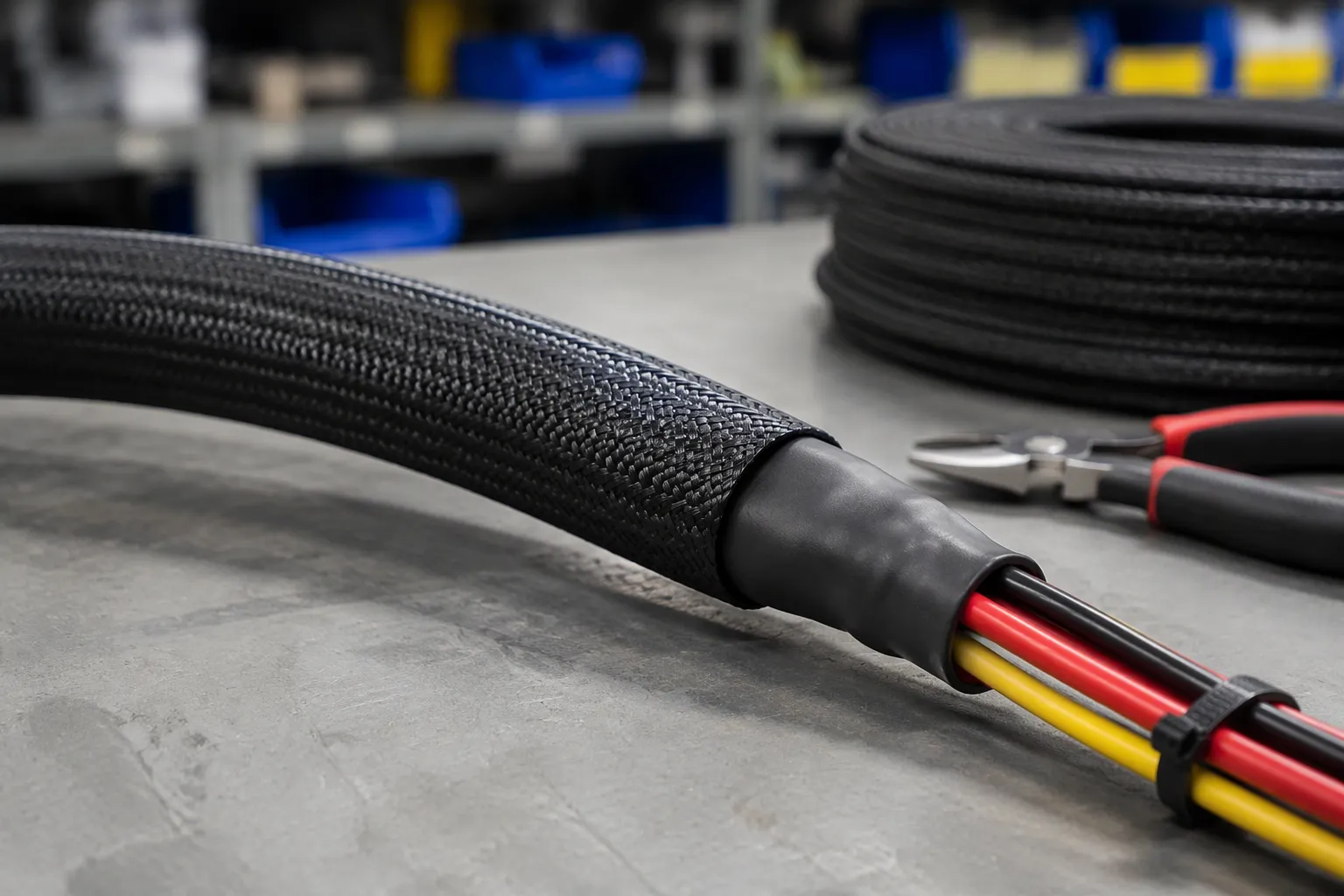
Overview and Key Benefits
Tubular sleeving slides over a cable bundle as a continuous, closed tube. The design delivers full coverage in a single pass, with no seam to open and no overlap to manage. AerosUSA describes nylon and polyethylene (PET) as lightweight and flexible, and notes that both materials adapt to individual needs and machine requirements. That adaptability shortens installation time and reduces downtime. Nylon brings durability and abrasion resistance, and expandable nylon styles conform to different shapes while blocking moisture. Polyethylene adds water resistance, corrosion strength, and high impact protection, and it relieves strain on machinery.
The protection profile covers the full range of industrial hazards. TPC Wire lists impact and crushing resistance, chemical resistance, moisture and corrosion defense, and flame-retardant options among the benefits of quality sleeving. Metallic tubular styles also preserve signal integrity where interference threatens performance. Installers secure the ends with heat shrink tubing, cable ties, or clamps, and the tube stays put without shrinking. Buyers who need a fast, uniform wrap around long runs of wires and cables find tubular designs hard to beat.
|
Tubular type |
Temperature range |
Standout benefit |
|---|---|---|
|
Silicone fiberglass |
-54°C to 260°C |
Moisture and chemical resistance |
|
High-temperature silica |
-40°C up to 982°C |
Extreme heat, flame, and spark defense |
|
Ceramic fiber |
Up to 1200°C |
Flash heat and flame protection |
|
Fiberglass |
Up to 538°C |
Flash heat, chemical, and mechanical abuse |
|
Stainless steel 304 |
Melts at 1450°C |
Abrasion and mechanical abuse |
Best Uses for Tubular Options
Tubular sleeving fits jobs that reward containment and speed. ChafePro reports that tubular sleeves protect and contain hose assemblies, ropes, wire harnesses, and chains, and that heavy equipment manufacturers, automotive suppliers, hose repair shops, and rope companies form the core market. A plant that routes a long harness through a machine frame can pull one continuous tube over the run and finish both ends in minutes. Outdoor runs benefit from moisture and UV defense, and high-impact zones benefit from the crush resistance of nylon or polyethylene.
The family also covers extreme heat duty. Silica tubular sleeving expands and contracts by 20% of its nominal size, per TPC Wire, which helps during installation over fittings. Ceramic and stainless steel options handle flash heat and heavy mechanical abuse. ChafePro sells standard tubular stock in 300-foot rolls in black, a format that suits maintenance shops and distributors. Matching the tube material to the dominant hazard keeps protection cost-effective and keeps wiring reliable for the long term.
Braided vs. Woven vs. Tubular
Abrasion, Flexibility, and Coverage
Abrasion resistance separates the three families first. Nylon braided sleeving offers superior abrasion resistance compared with other braided sleeve materials, so high-friction routing favors the braided family. Woven constructions interlock warp and weft yarns for tighter coverage and stronger structural stability, which blocks fine debris and resists fraying at cut ends. Tubular designs deliver full coverage in a single pass, and nylon or polyethylene tubes add crush and impact defense. Stainless steel braided sleeving extends the abrasion story into mechanical abuse, where metal braid outlasts textile yarns.
Flexibility follows a different order. Braided sleeving bends and twists around tight corners without kinking, and expandable styles stretch over bulky connectors before gripping the bundle. Tubular sleeving holds a fixed diameter, so installers must match tube size to bundle size before routing. Woven wrap-around sleeving bridges the two: an installer opens the wrap over an assembled harness and closes the seam, which suits retrofits that a closed tube cannot reach. Woven wrap braided sleeving serves the same wrap-style need with a braided structure. Coverage density rises from open braid to tight weave to closed tube, and each step trades installation speed for containment.
Temperature, Chemical, and UV Resistance
Heat performance draws the sharpest line between the families. Braided sleeving is flexible and easy to install, but it lacks the high temperature resistance of high temperature woven sleeving. High-temperature woven sleeving uses fiberglass, silica, or aramid fibers, and the HellermannTyton 170-03162 Nomex style operates from -320°F to +662°F while it self-extinguishes and resists most acids. High temperature woven sleeving therefore covers engine bays, furnaces, and foundries. High-temperature woven sleeving also handles kiln and oven wiring. Plants that standardize on high temperature woven sleeving simplify spares across hot-zone equipment. High-temperature woven sleeving earns its cost wherever radiant heat shortens the life of other types of sleeving. Buyers who specify high temperature woven sleeving for exhaust runs get predictable service life.
Chemical and UV resistance depend more on material than on construction. Braided PET and nylon resist salts, solvents, de-icing fluids, and petroleum products, and they shrug off sunlight in outdoor runs. Polyethylene tubular stock adds water and corrosion resistance. PPS braided styles bring flame and chemical resistance with low moisture absorption. The table below compares representative temperature ceilings across the tubular family.
|
Tubular material |
Temperature limit |
Resistance highlight |
|---|---|---|
|
Silicone fiberglass |
-54°C to 260°C |
Moisture and chemicals |
|
Fiberglass |
Up to 538°C |
Flash heat and chemical abuse |
|
High-temperature silica |
Up to 982°C |
Flame and spark defense |
|
Ceramic fiber |
Up to 1200°C |
Flash heat and flame |
|
Stainless steel 304 |
Melts at 1450°C |
Abrasion and mechanical abuse |
This cable protection sleeving types compared view shows one clear pattern. Braided wins on flexibility, woven wins on heat and tight coverage, and tubular wins on full-coverage simplicity. A specifier who weighs cable protection against these limits picks the family that matches the dominant hazard, not the lowest price.
Application Fit
Harness, Routing, and Installation Scenarios
Installation method often decides the choice before performance does. Expandable braided sleeving stretches over connectors and then contracts to grip the bundle. Technicians thread it from one end, a slow step on pre-terminated wire harnesses. Self-closing styles wrap around the bundle from the side, and the overlap adds coverage redundancy. That side entry saves installation labor on retrofit and field work.
|
Harness situation |
Good starting point |
Verify before ordering |
|---|---|---|
|
Connectors fitted after sleeving |
PET expandable braided sleeving |
Installed diameter and cut length |
|
Large connectors already fitted |
Self-closing braided or woven sleeving |
Overlap across the full diameter range |
|
Later inspection or cable additions |
Self-closing braided or woven sleeving |
Ease of reopening |
|
Tight bends and branches |
Test both self-closing constructions |
Overlap in the final routing |
Matching Each Type to the Job
Control panels reward self-closing braided sleeving, because technicians reopen sections during service. Industrial machinery favors closed-wall tubular stock for dust and moisture defense, and split tubing speeds field repair. Automotive harnesses in hot zones call for fiberglass or Nomex constructions, where high temperature woven sleeving outperforms standard braid. Outdoor runs need UV and moisture resistance, so polyethylene tubular sleeves or coated braided sleeving fit best.
Three starting points cover most projects. PET expandable braided sleeving suits open-end installation before connectors go on. Self-closing braided sleeving suits assembled harnesses and retrofits. Self-closing woven sleeving suits buyers who want to compare a woven surface against a braided one where visible finish matters. High-temperature woven sleeving covers engine bays and furnace areas, and high temperature woven sleeving remains the reference point for radiant heat. Each option protects wires and cables well; the routing, not the catalog, sets the match. MJ FLEX treats every type of sleeving as one part of a complete cable and wiring solution.
Regulatory Compliance Compared
Standards and Certifications to Check
Compliance review starts with the flame rating. Alibaba's fire-resistant cable sleeve guide treats UL 94 V-2 as the baseline, where material drips but extinguishes within 30 seconds, and UL 94 V-0 as preferable for critical paths, with no dripping and extinction within 10 seconds. Smoke density matters in enclosed spaces; ASTM E662 caps specific optical density at 75 at 4 minutes. Halogen-free construction under IEC 61249-2-21 protects confined spaces from toxic HCl gas. Weave tightness of at least 12 picks per inch blocks fine particulate and strengthens the flame barrier.
Flame test standards vary by market and installation. Sunkean explains that VW-1 is common in North America for UL-certified cable, while IEC 60332-1 tests a single cable under vertical flame and suits solar, industrial power, and outdoor runs. IEC 60332-3 applies to bundled installations in trays or conduits, such as data centers and utility-scale plants. Buyers should also verify UV claims against real exposure, particularly where direct sunlight exceeds six months per year.
|
Standard / Certification |
Requirement or Value |
|---|---|
|
UL 94 |
V-2 baseline; V-0 for critical paths |
|
Continuous temperature |
Fiberglass 550°C; aramid 200–260°C; FR-PET 125°C |
|
Smoke density (ASTM E662) |
Ds ≤ 75 at 4 min |
|
Halogen-free (IEC 61249-2-21) |
Required for confined spaces |
|
Weave tightness |
≥12 PPI |
Compliance by Sleeving Type
Each family carries different compliance strengths. Braided PET and nylon styles meet common flame ratings, yet high temperature woven sleeving covers aramid duty in the 200–260°C band. High-temperature woven sleeving with fiberglass reaches 550°C continuous, and fiberglass sleeving self-extinguishes without melting. High temperature woven sleeving therefore satisfies the toughest heat clauses. Tubular constructions add halogen-free and low-smoke options for tunnels and data halls.
Compliance needs vary by application. A rooftop solar run and a data center tray demand different standards, and no single sleeving clears every clause. MJ FLEX confirms the applicable ratings for each project before specification.
Cost Comparison
Unit Cost vs. Total Cost of Ownership
Unit price tells only part of the story. Buyers should weigh three factors together: durability, replacement frequency, and installation time. Alibaba's comparison of cable sleeving solutions against molded cable products puts sleeving unit cost at $0.05–$0.15 per unit in bulk, with replacement every 1–3 years. Molded parts cost more upfront but last 10–20 years. Sleeving still wins on speed, because off-the-shelf stock ships immediately.
Installation time carries real money. PatSnap reports that multifunction sleeving costs 60–70% less upfront than equivalent cable carrier installations, and its 40–50% installation time advantage cuts deployment expenses directly. PatSnap also places the break-even point at roughly 18–24 months of operation, depending on application parameters and local labor costs. A plant that replaces cheap sleeving every year may spend more than a plant that buys a durable grade once.
|
Cost factor |
Sleeving profile |
|---|---|
|
Unit cost (bulk) |
$0.05–$0.15 per unit |
|
Replacement frequency |
Every 1–3 years |
|
Lead time |
Immediate, off-the-shelf |
|
Hidden costs |
Downtime, cable damage from poor fit |
When Higher Cost Pays Off
Premium materials earn their price in harsh duty. Davlyn Group recommends silicone-coated fiberglass sleeves for steel mills, welding operations, and engine compartments exposed to flame or molten splash. Basalt sleeves suit continuous high-temperature exposure and rugged abrasion, including engine and exhaust insulation. Both materials carry higher performance thresholds than traditional fiberglass, which prevents premature degradation and unplanned downtime.
Buyers should match the premium to the hazard. Davlyn Group lists silicone as best for molten metal splash, weld spatter, and retrofit work, and basalt as best for continuous heat and uncoated system designs. In high-abrasion or high-heat environments, paying more delivers better value through fewer replacements and less downtime. In light-duty or temporary runs, standard sleeving remains the economical choice.
Best Seller Spotlight
Product Profile
The MJ FLEX E-FLEX PET+PA hybrid braided sleeving earns its best-seller status through a simple idea: combine two yarns, keep both strengths. Polyester contributes lightweight flexibility and economical coverage. Nylon adds toughness and high abrasion resistance. The hybrid build carries ISO 6722-1 Class 6 abrasion resistance and meets GMW14327 thermal stability requirements, two benchmarks that automotive and industrial buyers recognize immediately.
Installers value the expandable structure. The sleeve stretches over bulky connectors, then grips the bundle once routed. Cut ends stay clean, and the open weave releases heat and moisture instead of trapping them. Buyers who compare it against plain polyester braid see the difference in friction zones, where the nylon content resists repetitive wear far longer. The same construction resists salts, solvents, and UV exposure, so one part number covers indoor panels and outdoor runs alike.
Application Example
An automotive Tier 1 supplier faced a recurring failure on an engine-adjacent harness. Standard polyester braid frayed within months at a bracket contact point, and warranty claims climbed. The team switched the affected run to E-FLEX PET+PA and kept the rest of the harness unchanged. Abrasion failures at the bracket stopped, and the Class 6 rating gave the quality team a documented number to defend in customer audits.
The result spread beyond that line. Plant engineers now specify the hybrid braid for door routing, battery cable runs, and chassis sections that see vibration and road spray. Distributors stock it because one SKU replaces two. For buyers weighing stainless steel braided sleeving against textile options, the E-FLEX story shows where a well-chosen polymer blend delivers enough durability at lower weight and cost. That balance explains the order volume.
Selection, Installation, and Maintenance
Selection and Installation Tips
Selection starts with measurement. Buyers should measure the diameter and length of the cable bundle before ordering, per Gendian Materials, and choose a sleeve that expands enough to cover every cable. Material follows the environment: PET polyester suits durable, affordable duty, nylon brings high flexibility, and fiberglass handles heat. Installers working on cables already in place should consider a split style, which opens along the length and wraps the bundle directly.
Installation rewards a few simple habits. Gendian Materials recommends cutting the sleeving slightly longer than the bundle to leave room for connectors and finishing, and using a hot knife, heat cutter, or electrical tape at the cut line to prevent fraying. The installer then pushes the ends together to open the braid, slides the bundle through, and secures both ends with heat shrink tubing, zip ties, or cable clamps. Buyers Choice notes that expandable sleeving stretches to 150% of its size and forms a tight cover that adjusts to all shapes and contours. A final adjustment keeps coverage even, with the sleeve neither overstretched nor compressed.
Maintenance and Longevity Practices
Routine inspection protects the investment. AB Thermal advises checking sleeving periodically for wear, damage, or fraying, and addressing issues early before they grow into larger problems. XM Fire Sleeve adds that crews should inspect end to end for discoloration, tears, or small cracks that may lead to failure.
Cleaning calls for a gentle approach. A mild detergent with a soft brush or cloth removes dirt, and the sleeve should air dry completely before returning to service. Harsh chemicals, abrasive materials, and high-pressure water jets can damage the fibers. Crews should also avoid excessive bending, twisting, or heavy loads on the cables. Any damaged section warrants immediate replacement, since a worn sleeve weakens protection for the whole wiring run. Matching tubing and sleeve stock to the hazard, then maintaining it, keeps service life predictable.
Braided sleeving delivers flexibility and abrasion resistance. Woven constructions provide tight coverage and strong heat resistance. Tubular options offer full-coverage simplicity in a single pass. This cable protection sleeving types compared review shows one rule: match the type to the top priority and the application conditions. No single option wins everywhere. Teams that default to one product often overpay or under-protect. MJ FLEX helps buyers select and specify the right sleeving for each project. Start with the priority, confirm the environment, then choose the type. That sequence turns the comparison into a confident specification.
FAQ
Which sleeving type handles the highest temperatures?
High temperature woven sleeving leads here. Fiberglass and silica constructions tolerate far more heat than standard braid, and the HellermannTyton 170-03162 Nomex style operates from -320°F to +662°F. Braided sleeving remains flexible and easy to install, yet it lacks that heat ceiling. Specifiers route hot-zone runs to the woven family.
Does braided sleeving replace heat shrink tubing?
No. Braided sleeving does not shrink when heated. It keeps its shape and slides over the cable bundle instead. Installers secure the ends with heat shrink tubing, cable ties, or clamps. The two products often work together on the same harness.
How does a buyer choose between braided and woven constructions?
Start with the dominant hazard. Braided sleeving wins on flexibility and abrasion resistance, especially in nylon. Woven construction interlocks warp and weft yarns for tighter coverage and stronger structural stability. This cable protection sleeving types compared framework keeps the decision tied to the application, not to habit.
Can tubular sleeving cover a harness that is already installed?
Only with difficulty. A closed tube must slide over an end, so pre-terminated harnesses slow the job. Wrap styles solve this problem. Woven wrap-around sleeving opens along its length and closes over the bundle, and woven wrap braided sleeving offers the same side-entry approach with a braided structure.
When does a higher-priced sleeving pay for itself?
Premium grades earn their cost in harsh duty. PatSnap places the break-even point at roughly 18–24 months of operation, depending on application parameters and local labor costs. High-abrasion and high-heat zones reward durable materials through fewer replacements and less downtime. Light-duty runs favor standard stock.